

The Design Philosophy Behind Our Bags
My name is Lisa Edin, and I am responsible for design and concept development at Docksta. Bags are now an established segment for us, and I’d like to share my design philosophy with you.
When I think about design, it’s not about standing out the most. I am drawn to what is often called quiet luxury, where luxury is expressed through quality, materials, and craftsmanship. It is an aesthetic and an approach to design without loud logos or scattered collections.
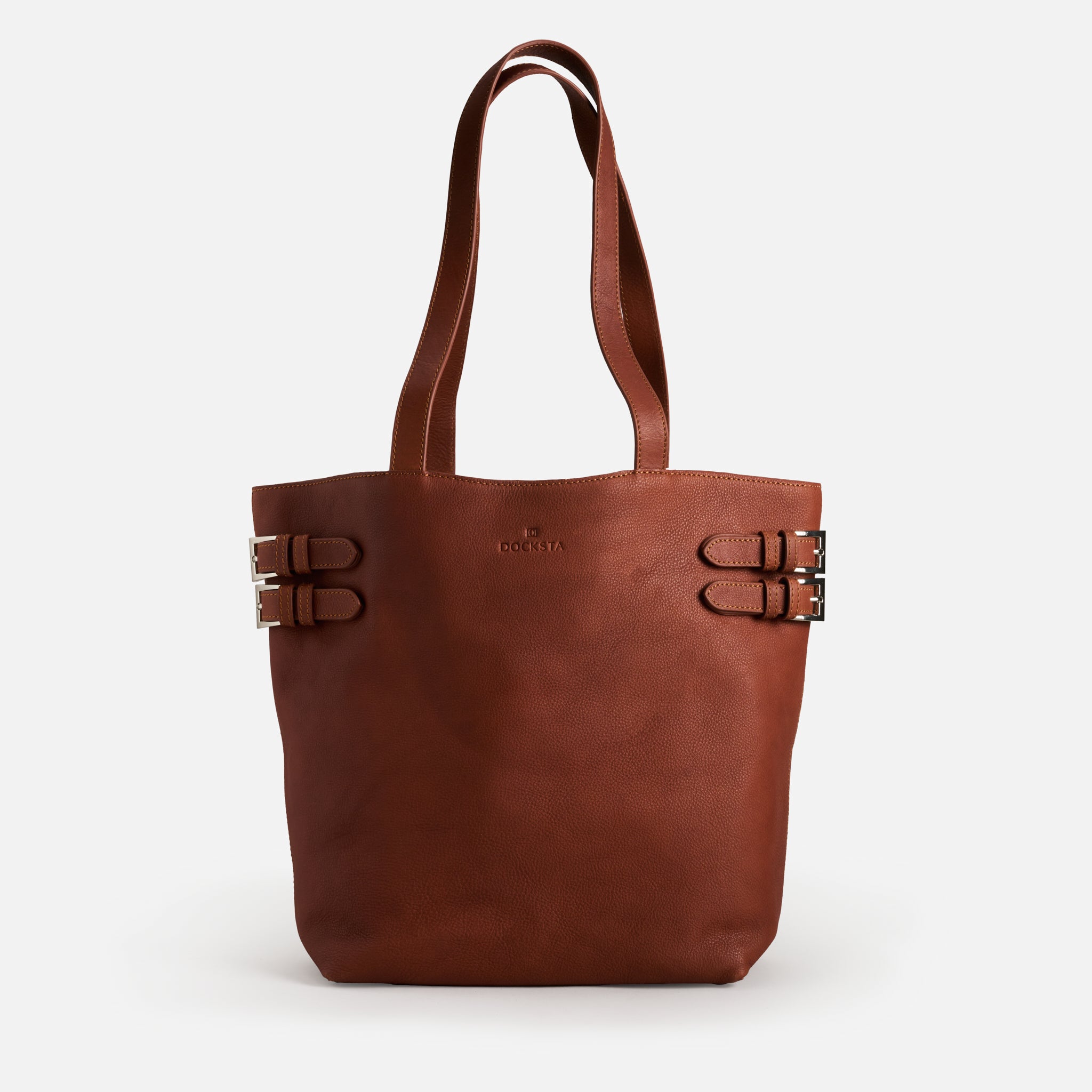
For me, everything starts with construction. A bag is essentially an architectural object made of soft material. How the panels meet, how the load is distributed in the handles, how the base is reinforced—these details determine if the bag ages beautifully or loses its shape after a year. I have always been obsessed with the details that aren't visible at first glance: stitch density, edge folding, and how the lining is attached so it doesn't twist.
A Decade in Leather Production
For more than a decade, I have owned and operated a factory where we primarily manufacture leather shoes, but also bags, accessories, and interior decor. My time in the factory has shaped the way I view design. When you spend your days at cutting tables, sewing machines, and lasting racks, you quickly realize that ideas are only as good as their execution.
We work with everything from full-grain leather to vegetable-tanned hides and various types of split leather. Every material requires its own technique. A firm, vegetable-tanned leather can be shaped and burnished at the edges until it achieves an almost ceramic finish, while a softer chrome-tanned leather needs reinforcements and interlinings to maintain its structure.
Today, our bags are manufactured in carefully selected factories abroad, following our exact specifications, drawings, and material choices. These are specialists who, in some cases, have worked with the same craft for generations. It is not the quantity that matters, but the precision and experience of the people doing the work. That pride in craftsmanship shines through in the final product.
I am sometimes asked why we don’t manufacture all our bags here in our own factory. While some of our simpler models are made in Docksta, the production of shoes and bags differs significantly. We lack the specific machinery and specialized knowledge required for advanced bag construction. Docksta stands for high quality, and therefore we partner with some of the world’s most prominent factories that specialize solely in bag manufacturing to achieve the excellence we strive for.

Stitching No One Sees, But Everyone Feels
One of the most underrated parts of a bag is the stitching. I often prefer a slightly tighter stitch length than the standard, as it provides a more defined silhouette. The seam should be straight and even, following the lines of the bag to be aesthetically pleasing. Thread quality is also paramount; waxed thread is often preferred as it is resistant to moisture and abrasion.
Areas subject to high stress, such as attachment points for shoulder straps and handles, are reinforced with extra stitching and backstitching—a technique where the needle moves forward, then back into the previous stitch, and forward again so that each stitch overlaps the last, creating an incredibly durable seam.
A technique often used in high-quality bag making is the saddle stitch. This is a traditional manual sewing technique done by hand to join leather pieces. It is one of the strongest sewing methods in existence, characterized by using two needles and a single thread that crosses itself inside every hole. If one thread were to break in a saddle stitch, the seam remains intact because the second thread continues to hold the material together.
The edges of the leather also speak volumes about a bag’s quality. Personally, I prefer them to be painted in several layers, sanded, and polished to prevent fraying and protect the seams over time. While raw edges can suit certain styles, they can look "tired" over time if not handled correctly.
The Silent Language of Materials
The choice of materials is where true luxury resides. Good leather shouldn’t just look beautiful when new; it should develop a patina and depth over time. The same applies to the hardware. A zipper should glide smoothly without noise, carabiners should have weight without feeling clunky, and the metal finish should harmonize with the leather’s tone rather than compete with it.
The lining is another detail I prioritize. A lining that is too thin makes the bag feel fragile, while one that is too thick makes it less elegant. The balance is often found in a densely woven fabric that provides structure without adding unnecessary weight.
Design Built to Last
I don’t design for a season; I design for years of use. Therefore, I avoid solutions that only work visually for the moment but fail practically. A bag should feel discreet with a casual outfit, yet thoughtful and sophisticated enough for formal occasions.
I believe the most sustainable bag is the one you can carry for many years and pass down through generations. Ultimately, it’s about respect for both the material and the craft. Take care of your bag and follow our leather care advice to give your bag the best possible longevity.
Best regards,
Lisa Edin
CEO & Head of Design
